
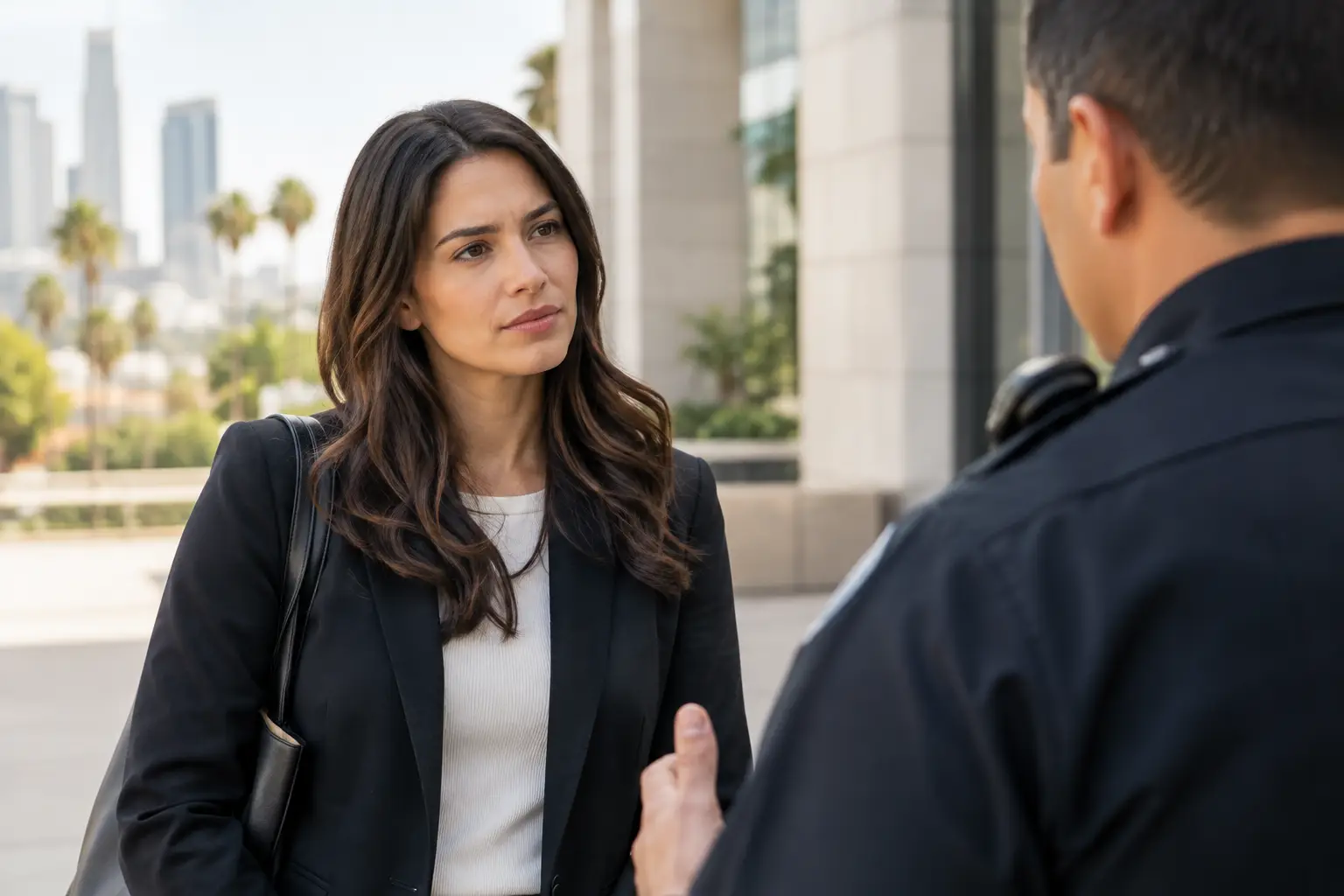
A detective calls and says they only want to “clear something up.” An officer leaves a business card at your home. You receive a request to come to the station for an interview. Before you respond to police interview requests, understand what is at stake: the conversation may be an effort to obtain admissions, test a theory, identify inconsistencies, or secure evidence for an arrest warrant or filing decision.
You do not need to decide what to say because an officer sounds calm, friendly, or certain that you are not a suspect. In Los Angeles County investigations, people are often contacted before charges are filed precisely because investigators want information that they do not yet have. The safest immediate response is to remain polite, say that you want to speak with a criminal defense attorney before answering questions, and stop discussing the matter.
A Police Interview Request Is Not Always a Command
Police may ask you to come to a station, speak by phone, meet at your workplace, or answer questions at your door. A request is not automatically an order. If an officer wants you to voluntarily appear for an interview, you can usually decline to participate or have counsel communicate on your behalf.
That changes when law enforcement serves a valid subpoena, executes a warrant, or places you under arrest. Even then, an obligation to appear or comply with a lawful process does not create an obligation to answer investigative questions. Do not ignore court papers, a subpoena, or a warrant situation. Get legal advice promptly about what the document requires and how to respond.
A common mistake is assuming, “If I have nothing to hide, I should just explain.” Criminal investigations do not turn only on whether a person intended to be truthful. A harmless detail can be misunderstood. A mistaken time, a name omitted from an answer, or an attempt to protect someone else can be portrayed as consciousness of guilt. Investigators may also know more – or less – than they suggest.
What to Say When Police Contact You
You do not need a long explanation. A short, controlled response is usually better: “I want to speak with an attorney before answering any questions.” If you are already being questioned while detained or arrested, say clearly: “I am invoking my right to remain silent. I want a lawyer.” Then stop talking.
Do not try to negotiate around that request by answering “just one” question. Do not offer an informal statement while waiting for an attorney. Do not explain that you would be willing to talk later. Once you have asserted your rights, protect the assertion by remaining silent.
If you are unsure whether you are free to leave, ask directly: “Am I being detained, or am I free to go?” If you are free to leave, leave calmly. Do not physically resist an officer, interfere with an investigation, or argue roadside or at the station. A lawyer can challenge an unlawful detention, search, arrest, or interrogation later. You cannot undo a damaging statement once it has been made.
Why “Voluntary” Interviews Can Be Risky
Many people expect a warning before any police questioning. The Miranda warning generally applies to custodial interrogation – questioning while a person is in custody. It does not mean officers must warn a person before every voluntary conversation, doorstep interview, or phone call.
An officer may say you are not under arrest and are free to leave, then ask detailed questions about where you were, who was present, what you saw, and what you did afterward. If you choose to answer, those statements can be documented in a report, recorded, compared against video or phone data, and used in a later case.
Detectives can use interview techniques designed to encourage talking. They may minimize the seriousness of the allegation, suggest that silence looks bad, claim that a witness has already implicated you, or say they only need your side of the story. Those statements may be strategic. They are not a reason to surrender control of the situation.
This is especially serious in allegations involving domestic violence, sex offenses, theft, assault, weapons, drug activity, or financial crimes. In these cases, an accusation can lead to search warrants, protective orders, employment consequences, professional licensing concerns, and swift charging decisions. A poorly handled interview can shape the evidence before the defense has had an opportunity to review it.
Do Not Lie, Guess, Consent, or Delete
Remaining silent is different from lying. Do not make up an answer, guess at facts, give an alibi you have not carefully confirmed, or send a message meant to influence another person’s account. False statements can create separate legal exposure and can severely damage credibility.
Do not consent to a search of your phone, vehicle, home, cloud accounts, or social media simply because officers ask. Consent can expand an investigation quickly, and digital devices often contain far more information than the subject of the interview. If officers have a warrant, do not obstruct them. State that you do not consent to any search beyond what the warrant authorizes and contact counsel as soon as possible.
Also, do not delete texts, alter records, wipe devices, or destroy physical items after learning of an investigation. Those actions can be interpreted as an effort to conceal evidence and may create serious additional problems. Preserve potentially relevant materials and discuss them privately with your attorney.
What a Defense Attorney Can Do Before Any Interview
Early representation is not about sending a dramatic letter or assuming charges will be filed. It is about obtaining reliable information, controlling unnecessary exposure, and making informed decisions before the government locks in its narrative.
Counsel may contact the detective to determine whether the client is being treated as a witness, victim, person of interest, or suspect. The answer is not always complete, but the conversation can reveal the agency involved, the nature of the allegation, whether an interview is truly voluntary, and whether immediate action is needed.
Sometimes a carefully limited attorney-facilitated communication makes sense. In other situations, the correct decision is no interview at all. That judgment depends on the known evidence, whether other witnesses or recordings exist, the risk of arrest, possible defenses, and whether speaking would help or simply give investigators new leads.
A defense lawyer can also begin preserving favorable evidence. Surveillance footage may be overwritten. Location data, rideshare records, receipts, work schedules, messages, and witness recollections can become harder to obtain with time. Early investigation matters because prosecutors and police are not responsible for building the defense case.
Special Concerns for Parents and Juveniles
Parents often believe they can solve a juvenile investigation by taking their child to the station and allowing a conversation. That can be a costly decision. A minor may be nervous, eager to please authority, unclear about the allegation, or willing to adopt an officer’s version of events.
California law provides added protections for certain custodial interrogations of younger minors, including a consultation requirement with counsel in many circumstances. But a parent’s presence is not a substitute for a juvenile defense attorney, and those protections do not make every interaction with police safe. Before a child speaks to police, get legal advice focused on the specific investigation.
If You Already Agreed to an Interview or Made a Statement
You can still stop. If the interview has not begun, tell the officer you will not answer questions without counsel. If it is underway, invoke your right to remain silent and request an attorney. Do not try to repair an earlier statement by adding more details on your own.
Afterward, write down what happened while it is fresh: who contacted you, when and where the conversation occurred, whether you were told you could leave, who was present, what was said, and whether you signed or consented to anything. Do not circulate those notes to friends or post about the incident online. Provide them to your lawyer.
Wegman & Levin APC represents people facing police investigations in North Hollywood, Los Angeles, the San Fernando Valley, throughout Los Angeles County, and all of Southern California. If police want an interview, call (818) 495-8330 for a confidential consultation before you speak. Relentless Defense. Proven Results.
The best time to protect your position is before an interview becomes the prosecution’s evidence.


