
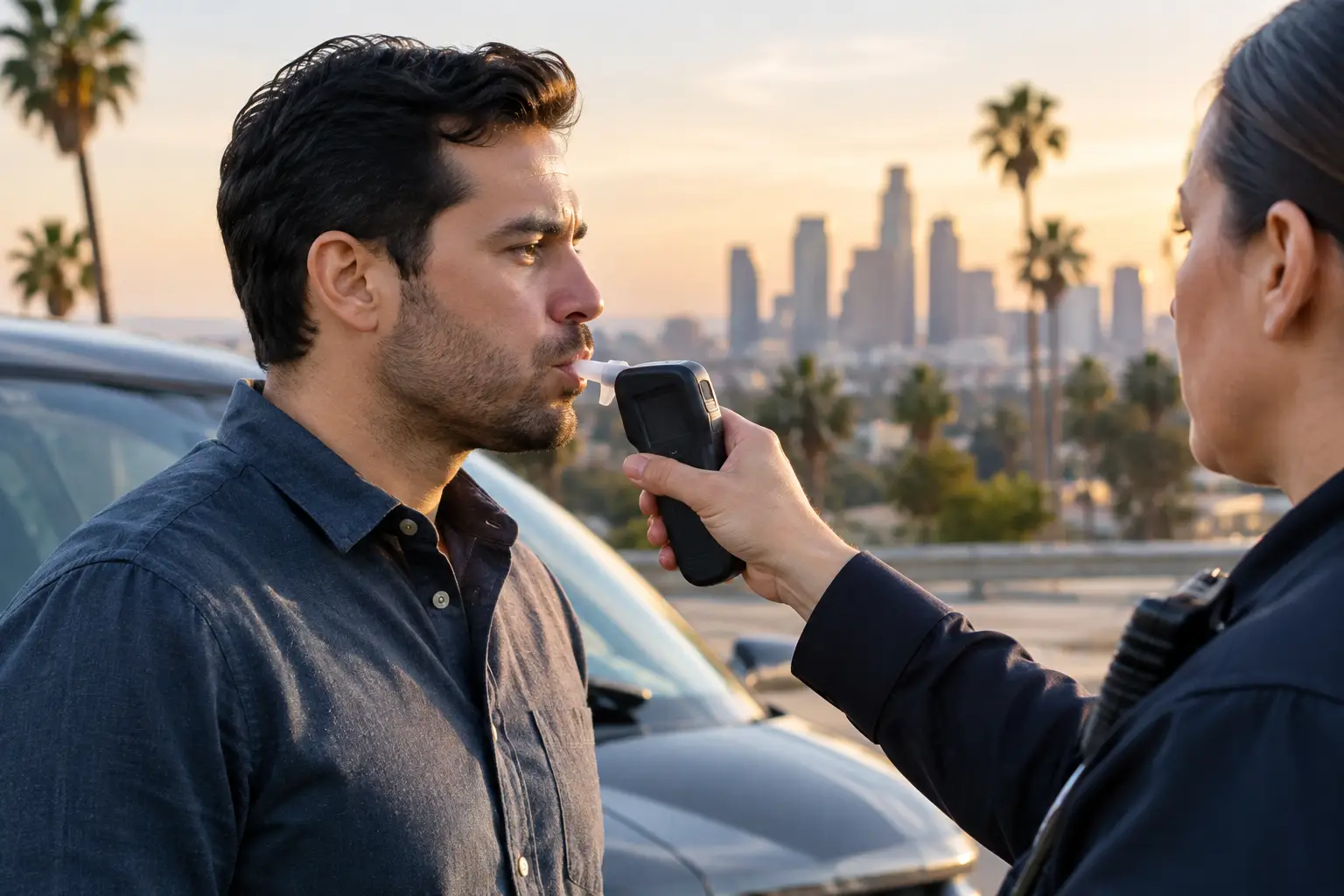
A DUI arrest can feel like the result of a machine, a blood sample, or an officer’s opinion that cannot be challenged. That is not how a criminal case works. DUI testing errors can affect whether the prosecution can rely on a breath result, blood alcohol analysis, field sobriety observations, or a claimed timeline of drinking and driving.
In Los Angeles County, the government still must prove the charge with admissible, reliable evidence. A reported blood alcohol concentration is evidence, not a verdict. The defense should obtain and examine the underlying reports, video, maintenance records, collection paperwork, and laboratory documentation before deciding whether a case should be negotiated, litigated through motions, or taken to trial.
A DUI Number Does Not Explain How It Was Produced
California DUI cases commonly proceed under Vehicle Code section 23152(a), alleging that a person drove while under the influence, and section 23152(b), alleging a blood alcohol concentration of 0.08% or more while driving. Those are different theories. A chemical test may be central to a 23152(b) allegation, but it does not automatically establish impairment under 23152(a). Conversely, an officer’s claimed signs of impairment may be disputed even where a later test result is at issue.
The timing matters. A breath or blood test usually occurs after the vehicle stop, roadside investigation, arrest, transport, and booking process. Alcohol absorption and elimination do not stop for law enforcement procedures. If a test was taken substantially after driving, the prosecution may try to use retrograde extrapolation to estimate an earlier alcohol level. That opinion depends on assumptions about when the person drank, ate, absorbed alcohol, and stopped drinking. Those assumptions can be weak, particularly where the evidence shows recent consumption.
A careful defense investigation begins with a simple question: What happened from the moment of driving through the moment of testing? Dispatch records, body-worn camera footage, surveillance video, receipts, witnesses, and the officer’s own timestamps may answer it differently than a short police report.
Breath Test Errors and the 15-Minute Observation Period
California breath testing is governed in part by Title 17 regulations. Compliance does not make a result immune from challenge, but departures from required procedures may be significant. One frequent issue is the observation period before a breath sample is collected. The operator is expected to observe the person for at least 15 minutes to make sure the person does not eat, drink, smoke, regurgitate, or place anything in the mouth that could affect the test.
The point is not merely technical. Mouth alcohol can produce an inaccurately high breath result. Regurgitation, belching, acid reflux, dental appliances, residual alcohol, or an object in the mouth can require closer examination of whether the sample reflected deep-lung alcohol or contamination in the mouth.
The defense should also review the device’s calibration and accuracy-check records, the operator’s training, the sequence of samples, the reported agreement between those samples, and whether the paperwork actually identifies the machine used. A report that says a machine was checked is not a substitute for reviewing the records themselves.
Not every irregularity leads to exclusion of a breath result. Courts often allow the prosecution to argue that a deviation affects weight rather than admissibility. But that distinction matters in a jury trial. A jury may reasonably question a result when the government cannot show that basic safeguards were followed.
Blood Test Errors Can Begin Before the Laboratory
Blood testing can appear more scientific because it involves a sample sent to a laboratory. Yet the result is only as reliable as the collection, preservation, transport, analysis, and reporting process behind it.
The first issue is whether the sample was properly drawn and identified. The collection kit, expiration date, preservative and anticoagulant, vial labeling, seal, and chain of custody can all matter. A missing signature or minor paperwork issue does not necessarily prove a switched sample. Still, unexplained gaps can create legitimate questions about whether the sample tested by the laboratory was collected from the accused and maintained in a condition suitable for analysis.
Preservation is another concern. Blood vials generally contain additives intended to inhibit clotting and reduce bacterial activity. If a sample was improperly stored, poorly preserved, or delayed without adequate documentation, a qualified defense expert may need to assess whether fermentation or degradation could affect the reported result.
The laboratory records deserve the same attention as the police report. Counsel may examine the analytical method, quality-control materials, calibration data, batch records, chromatograms when applicable, and the analyst’s notes. A final laboratory number does not reveal whether a control failed, an instrument flagged an issue, a dilution was performed, or a transcription error occurred elsewhere in the process.
Field Sobriety Tests Are Not a Diagnosis
Officers frequently cite field sobriety tests as proof that a driver was impaired. These tests can provide observations, but they are not medical examinations and they are not designed to account for every person or every roadside condition.
The walk-and-turn and one-leg stand may be difficult for someone with an injury, age-related balance limitations, neurological conditions, fatigue, improper footwear, or anxiety. Uneven pavement, rain, traffic noise, poor lighting, and instructions that are rushed or unclear can affect performance. The horizontal gaze nystagmus test also requires correct administration and careful observation. Video often becomes critical because it allows a judge, prosecutor, or jury to compare the officer’s written description with what actually occurred.
A person can be nervous, frustrated, or confused during a DUI stop without being under the influence. A courtroom defense does not depend on inventing an alternative story. It depends on identifying what the evidence fairly shows and what the officer assumed.
How DUI Testing Errors Are Raised in Court
The right strategy depends on the problem found. A constitutional issue, such as an unlawful stop or detention, may support a motion to suppress evidence. A blood draw may raise separate questions about consent, a warrant, or an asserted exigency. Evidentiary problems may be addressed through objections, expert consultation, cross-examination, or a motion challenging the prosecution’s foundation for scientific evidence.
Some cases are resolved because a prosecutor recognizes an evidentiary weakness. Others require a contested DMV administrative per se hearing, a pretrial motion, or trial testimony from the arresting officer, forensic analyst, and experts. The Department of Motor Vehicles process is separate from the criminal court case, and the deadline to request an APS hearing is generally short. Waiting to see what happens in court can cost an arrested driver an opportunity to challenge the license suspension.
This is also why a person should not try to explain away a result to police after an arrest. Statements about drinking times, food, medication, or the amount consumed may later be used to support a prosecution theory. Exercise the right to remain silent and speak with counsel before giving a detailed account.
What to Preserve Immediately After a DUI Arrest
The most useful evidence may disappear quickly. Write down the location and time of the stop, what was said, the test sequence, medical conditions, medications, recent food or drink, and whether you burped, vomited, used mouthwash, or had dental work. Save receipts, ride-share records, text messages, and names of people who saw you before driving. Do not alter messages or post about the arrest online.
An experienced defense lawyer can move quickly to seek video and records before routine retention policies erase them. That work is not about finding a technicality. It is about forcing the evidence to withstand the scrutiny that a criminal conviction requires.
If you are facing a DUI allegation in North Hollywood, Los Angeles County, or elsewhere in Southern California, contact Wegman & Levin APC at (818) 495-8330 for a confidential consultation. Early review of testing evidence can shape the entire defense. Relentless Defense. Proven Results.