
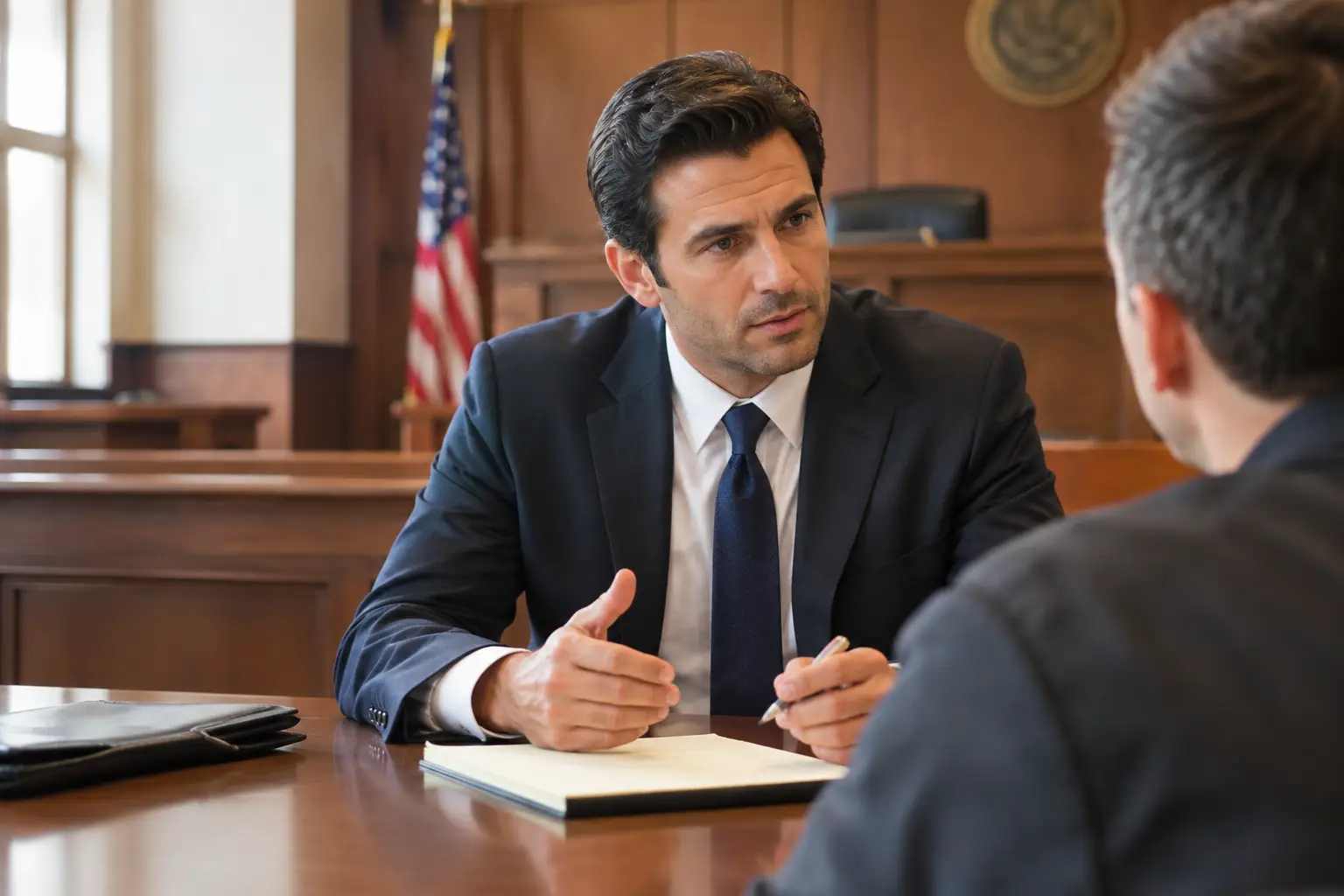
A criminal accusation becomes real fast: a detective wants an interview, a loved one is in custody, or a court date appears on a citation. At that point, criminal trial lawyer qualities are not abstract credentials. They affect how evidence is preserved, whether damaging statements are avoided, what happens at a bail hearing, and how the prosecution evaluates the case.
The right lawyer is not the person who offers the boldest prediction. It is counsel who understands the evidence, prepares for the courtroom from the beginning, and gives direct advice when the stakes involve liberty, a professional license, immigration concerns, family relationships, or a permanent criminal record.
Criminal Trial Lawyer Qualities Start With Courtroom Readiness
Many criminal cases resolve before a jury is selected. That does not make trial experience less relevant. It makes it more relevant.
A prosecutor’s assessment of an offer, a judge’s view of a disputed motion, and the way a case is prepared at a preliminary hearing can all be affected by whether defense counsel is ready and able to try the case. A lawyer who understands trial work recognizes early which facts must be tested, which witnesses need investigation, and what the prosecution will have to prove beyond a reasonable doubt.
Courtroom readiness is not theatrical. It is practical preparation: knowing how to question a witness without opening the door to harmful testimony; identifying hearsay problems; challenging the foundation for photos, videos, records, or digital evidence; and making a clear record when the court rules against the defense. These decisions can affect both the immediate case and any later appeal.
In Los Angeles County, the first hearings may move quickly. A lawyer should be able to assess the charging document, the police reports available at that stage, custody conditions, and upcoming deadlines without treating an initial appearance as a formality.
Preparation Before the Preliminary Hearing
For felony cases, the preliminary hearing can be a critical testing ground. The prosecution must present sufficient evidence to hold the accused to answer on the charged offenses. It is not a full trial, and the evidentiary rules differ in meaningful ways, but it can expose weaknesses in the government’s theory and lock witnesses into testimony.
A prepared defense lawyer looks beyond the report. Police reports are summaries, often written after the event and based on incomplete observations, assumptions, or secondhand statements. Preparation may include reviewing body-worn camera footage, surveillance video, 911 calls, dispatch logs, photographs, medical records, phone data, forensic reports, and the history of key witnesses.
The issue is not whether every case needs every type of investigation. It does not. The issue is whether counsel can identify what evidence actually matters. In a DUI case, that may mean examining the traffic stop, the driving pattern, the timing of chemical testing, and instrument records. In an assault allegation, it may mean locating video, identifying injuries consistent with self-defense, or examining prior communications between the people involved. In a federal matter, it may require a close review of discovery, warrants, interviews, and the government’s theory of intent.
A lawyer should explain the strategy, not just announce it
You should understand the immediate objective: obtaining release conditions, preventing an interview, preserving evidence, challenging a search, preparing for a preliminary hearing, or evaluating a negotiated resolution. Some strategic details should remain confidential, particularly while an investigation is active. But a client should not be left guessing about what counsel is doing or why.
Direct attorney involvement matters here. Criminal cases do not improve by waiting for the next court date. Videos can be overwritten. Witness memories can change. A voluntary statement to law enforcement can create evidence that did not previously exist. Exercise the right to remain silent and speak with a lawyer before discussing the allegation with police, investigators, alleged victims, employers, or anyone who may report your words.
Judgment Under Pressure Matters More Than Promises
A person facing charges understandably wants certainty. No responsible lawyer can promise a dismissal, acquittal, or particular sentence before the facts, evidence, judge, prosecutor, and procedural posture are known.
Strong judgment means being candid about exposure while also identifying defenses and pressure points. It means recognizing when a charge may not fit the evidence, when an identification deserves scrutiny, when a witness has a motive to exaggerate, when consent or self-defense is at issue, or when the prosecution may have a problem proving knowledge or intent.
It also means discussing trade-offs honestly. A motion can be legally sound but may reveal part of the defense theory. A quick disposition may reduce uncertainty but carry collateral consequences that are unacceptable for a licensed professional, a noncitizen, or a parent in a custody dispute. Going to trial may be the right decision in some cases, but it requires a clear-eyed assessment of risk and proof.
The quality to look for is not optimism alone. It is disciplined analysis delivered in plain language.
Evidence Literacy Is Essential
Modern prosecutions often turn on more than eyewitness testimony. Phones, cloud accounts, social media, vehicle data, license-plate readers, surveillance systems, DNA, toxicology, and recorded jail calls can all become part of a case. A criminal trial lawyer must be able to separate what an item of evidence appears to show from what it can actually prove.
For example, a text message may lack context, a location record may be imprecise, and a video clip may begin after the central event. Digital evidence also raises questions about collection, search warrants, authenticity, chain of custody, and interpretation. The prosecution bears the burden of proof, but the defense must be prepared to expose gaps rather than assume someone else will do it.
This work often begins well before trial. Counsel may need to seek discovery, file targeted motions, consult appropriate experts, or investigate alternative explanations. The value is not in filing motions for appearance’s sake. It is in pursuing the motions that can change the admissible evidence, clarify the issues, or preserve a serious legal challenge.
Communication and Confidentiality Are Part of the Defense
A criminal case demands communication that is prompt, accurate, and confidential. Clients need to know what to do after an arrest, what the next hearing is for, whether contact with another person could create a new problem, and what documents or evidence to preserve.
Good communication also means listening. A client may know of a witness, a video source, a medical condition, a prior relationship, or a timeline detail that is not in a police report. The lawyer must ask the questions that bring those facts forward and then assess them carefully.
At the same time, counsel should set realistic boundaries. Do not post about the case. Do not attempt to persuade or confront a witness. Do not delete messages or data. Do not violate a protective order or release condition. A lawyer who gives clear instructions can help prevent a difficult case from becoming worse.
Ask focused questions before retaining counsel
A consultation should help you determine whether the lawyer is prepared to handle the actual charge and stage of your case. Ask who will appear with you in court, what evidence needs immediate attention, what the prosecution must prove, and what consequences extend beyond custody. For a felony, ask how counsel approaches preliminary hearings, suppression issues, witness investigation, and trial preparation.
Listen for specific, case-centered answers. Be cautious when someone gives a guaranteed outcome without reviewing the facts or suggests that no preparation is necessary. Your decision should be based on experience, responsiveness, strategy, and confidence grounded in work, not sales language.
The Defense Should Continue After the Verdict or Plea
Criminal trial lawyer qualities can matter after a conviction as well. Sentencing requires preparation, mitigation, and a careful understanding of the court’s discretion. Depending on the circumstances, post-conviction work may involve an appeal, writ proceeding, resentencing request, expungement, or another form of relief.
Not every result can be changed, and post-conviction remedies have strict procedural rules. Still, a lawyer who builds a clear record, preserves objections, and considers long-term consequences from the outset gives the client a stronger foundation for every stage that follows.
If you or a family member faces an investigation or criminal charge in North Hollywood, Los Angeles County, or anywhere in Southern California, contact Wegman & Levin APC at (818) 495-8330 for a confidential consultation. Relentless Defense. Proven Results. begins with careful preparation before the case gains momentum.


