A roadside test can feel like a verdict when red and blue lights are behind you. It is not. In a Los Angeles DUI case, the prosecution may use an officer’s observations from field sobriety tests to justify an arrest and support a claim that you were impaired. But you can challenge roadside sobriety tests when the instructions, conditions, officer conduct, video, medical evidence, or scientific assumptions do not support the conclusions the officer wrote in the report.
Field sobriety tests are often presented as objective measures of impairment. In practice, they are divided-attention exercises administered on a roadside, sometimes late at night, beside traffic, under poor lighting, after a stressful police encounter. A person can perform poorly for many reasons unrelated to alcohol or drugs. The details matter, and they should be examined early by a defense lawyer who is preparing for the DMV hearing, court proceedings, and potentially trial.
What roadside sobriety tests are designed to show
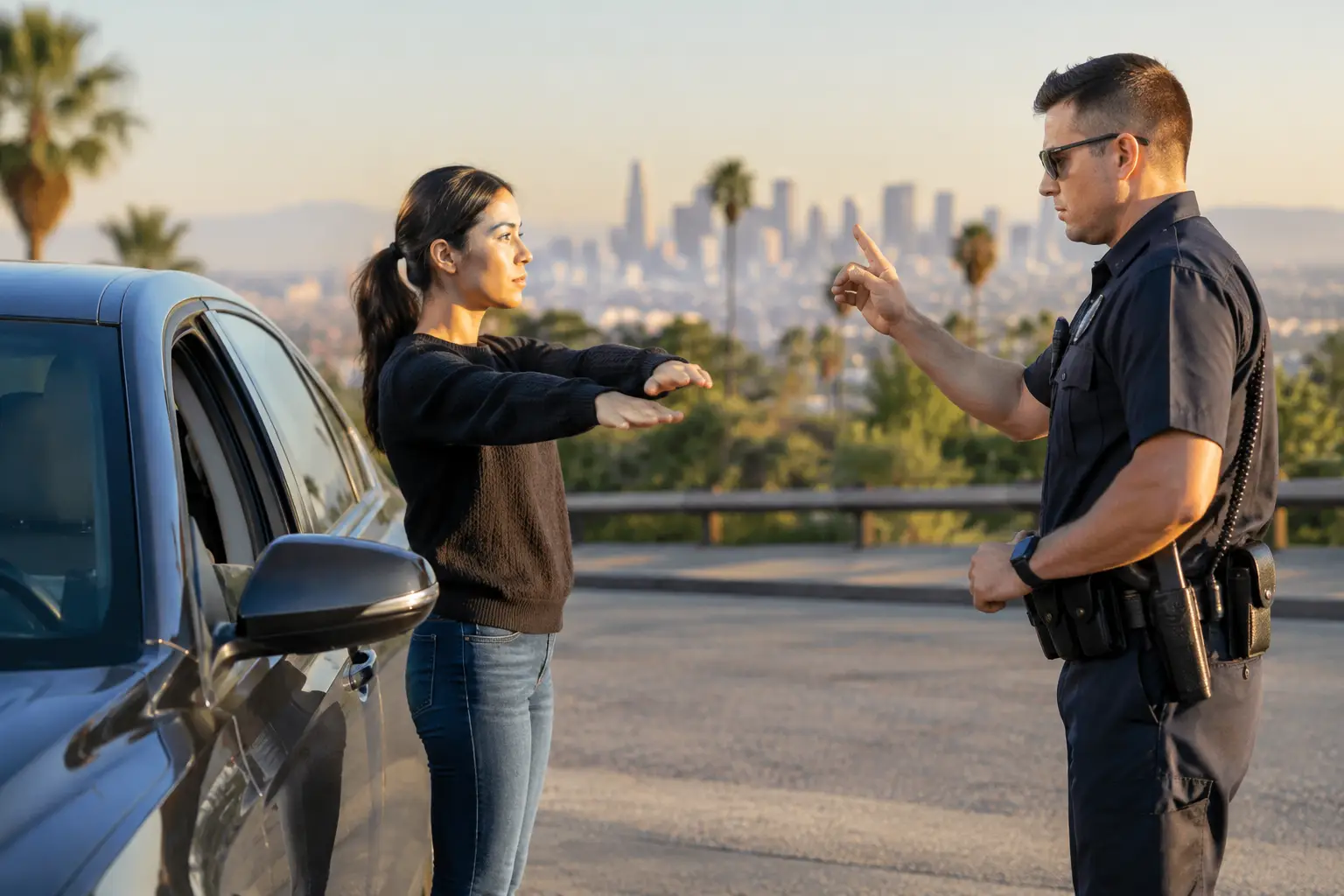
Officers commonly rely on three standardized field sobriety tests: the horizontal gaze nystagmus test, the walk-and-turn test, and the one-leg stand. The first involves the officer watching a driver’s eyes as they follow a stimulus. The other two require physical balance while listening to and following a sequence of directions.
These tests may be relevant evidence, but they do not directly measure a person’s blood alcohol concentration. They are not chemical tests, and they cannot by themselves establish a DUI charge under California Vehicle Code section 23152. Their usual function is more immediate: helping the officer claim there was probable cause for an arrest and giving the prosecutor additional observations to argue impairment.
That distinction is significant. A jury may hear phrases such as “failed the test,” but the defense can show what actually happened: whether the officer demonstrated the exercise, whether the person understood the instructions, what the road surface looked like, and whether supposed clues were scored fairly.
How to challenge roadside sobriety tests in a DUI case
The strongest defense is rarely a generic argument that field sobriety tests are unreliable. The more effective approach is to identify the specific reason a particular test was unfair, improperly administered, or overstated in your case.
Improper instructions and scoring
The walk-and-turn and one-leg stand tests require detailed directions. An officer may need to explain where to stand, when to begin, how to count, where to look, and what movements are permitted. If the instructions were rushed, contradictory, incomplete, or given while the driver was distracted by traffic or flashing lights, a claimed “failure” deserves scrutiny.
Officers are also expected to look for particular indicators, not simply announce that a person did poorly. Video footage can reveal that an officer counted ordinary movement as a clue, ignored successful portions of the test, or exaggerated a minor mistake in the arrest report. A defense attorney will compare the report with body-worn camera, dash camera, dispatch records, and any available surveillance footage rather than accept the report’s conclusion at face value.
Physical conditions that affect balance
A roadside is not a controlled testing environment. Gravel, broken pavement, a sloped shoulder, rain, cold weather, poor illumination, passing cars, and unsuitable footwear can all affect balance and coordination. A driver wearing heels, work boots, sandals, or restrictive clothing may have difficulty performing the exercises exactly as directed.
Physical and medical conditions can matter just as much. Prior injuries, arthritis, vertigo, inner-ear conditions, neuropathy, back pain, obesity, fatigue, and age can affect balance. Eye conditions, certain medications, and medical issues may also complicate the gaze nystagmus test. These facts are not excuses to invent after an arrest. When documented and connected to what the video shows, they may materially weaken the officer’s interpretation.
The officer’s training and test conditions
A courtroom challenge may focus on whether the officer followed accepted testing procedures and whether the officer had adequate training to draw the conclusion offered. For example, horizontal gaze nystagmus is not simply an eye-following exercise. The pace, distance, positioning of the stimulus, and observation of each eye are relevant. Head movement, patrol-car lights, wind, and an improperly positioned stimulus can affect the examination.
The officer’s report may use standardized language that makes the test appear more precise than it was. Cross-examination can expose omissions: no description of the surface, no notation of footwear, no inquiry about injuries, no explanation of lighting, or no confirmation that the driver understood English-language instructions. These omissions do not automatically end a case, but they can undermine probable cause and the prosecution’s impairment theory.
Field sobriety tests are usually voluntary before arrest
For many adult drivers in California, roadside field sobriety tests are voluntary. The same is generally true of a preliminary alcohol screening, or PAS, breath test offered before an arrest. California Vehicle Code section 23612 requires an officer to advise a person that the PAS test is optional before arrest in the circumstances covered by that provision.
There are important exceptions. Drivers under 21 and drivers on DUI probation can face different obligations involving preliminary alcohol screening. The rules also change after a lawful DUI arrest. Under California’s implied-consent law, a person arrested for DUI is generally required to submit to a chemical breath or blood test, subject to the applicable circumstances and advisements.
That is why advice must be precise. Declining voluntary roadside exercises is different from refusing a required post-arrest chemical test. A refusal allegation can carry serious consequences and become an issue in both the criminal case and DMV administrative process. Do not try to sort out those distinctions by arguing with an officer at the roadside.
What to do during a DUI stop
Remain calm. Provide required identification and registration documents, but do not volunteer explanations about drinking, medications, where you have been, or how you feel. You have a right to remain silent. Politely state that you want to speak with an attorney before answering investigative questions.
Do not physically resist, make sudden movements, or turn the encounter into a roadside legal debate. If an officer asks you to perform a voluntary field sobriety test, you can respectfully decline. If you have a medical condition or injury that affects balance or mobility, say so clearly. If you are arrested, remember the details you can: the location, weather, lighting, surface, your footwear, what the officer said, and whether the encounter was recorded.
The defense begins after the arrest
A DUI defense is not limited to the field sobriety tests. Counsel should evaluate why the vehicle was stopped, whether the detention was unlawfully prolonged, whether probable cause supported the arrest, and whether the breath or blood evidence was properly obtained and analyzed. Statements made during the stop, officer body-camera footage, 911 calls, dispatch logs, maintenance records, and laboratory evidence may all become important.
In Los Angeles County, early action also matters because DUI arrests can trigger a separate DMV license-suspension process with a short deadline to request a hearing. That hearing may provide an opportunity to obtain evidence and examine the basis for the arrest before the criminal case is fully underway.
A person who appeared unsteady on video may still have a defensible case. The question is not whether the prosecution can point to a roadside mistake. The question is whether the evidence, viewed carefully and fairly, proves impairment beyond a reasonable doubt.
If you were arrested after roadside tests in North Hollywood, Los Angeles, or anywhere in Southern California, contact Wegman & Levin APC at (818) 495-8330 for a confidential consultation. Direct attorney involvement, detailed evidence review, and courtroom preparation reflect our approach: Relentless Defense. Proven Results.