
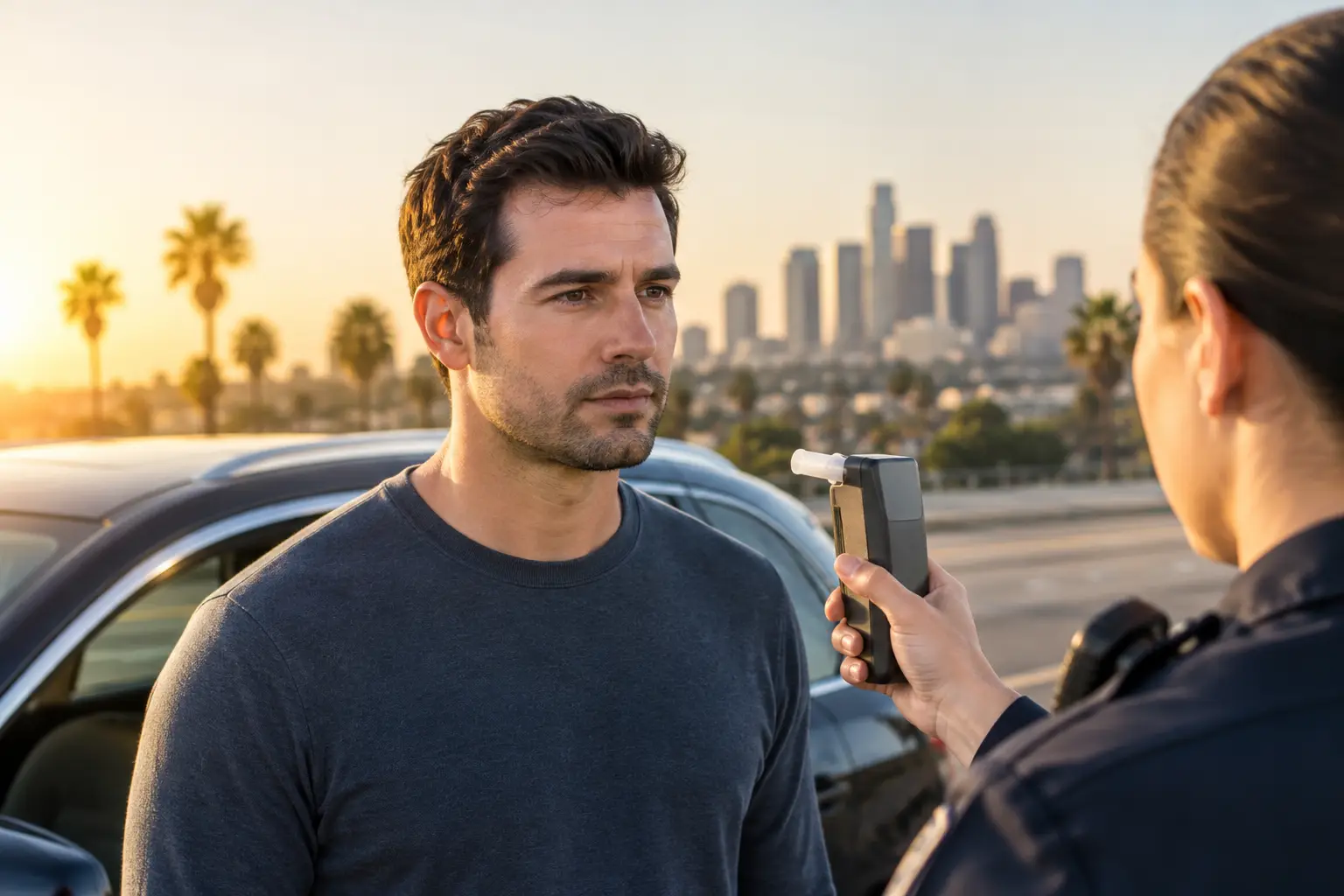
An arresting officer may book a driver for DUI, yet a prosecutor may later offer a wet reckless plea. That does not mean the case is minor or that the two outcomes carry the same consequences. In a DUI versus wet reckless decision, the evidence, the DMV case, your prior record, your profession, and the exact language of any plea all matter.
For someone arrested in Los Angeles County, the first concern is often immediate: Will I lose my license? Will I go to jail? Will this follow me at work? Those questions cannot be answered by looking only at the charge on a citation. A careful defense begins with the stop, the officer’s observations, the chemical test records, and the separate administrative process at the DMV.
DUI Versus Wet Reckless: The Legal Difference
A DUI generally refers to a violation of California Vehicle Code section 23152. The prosecution may allege that a person drove while under the influence of alcohol or drugs, drove with a blood alcohol concentration of .08% or more, or both. These are different theories, and the proof required for each can differ.
A wet reckless is usually not the charge filed at the outset. It is commonly a negotiated resolution under Vehicle Code section 23103.5, allowing a person to plead to reckless driving under section 23103 with alcohol or drug involvement noted in the case record. The word “wet” is courtroom shorthand for that alcohol- or drug-related reckless-driving disposition.
That distinction matters. A wet reckless is still a criminal conviction, and it is not the same as a dismissal. It may carry probation terms, fines, court assessments, DUI-related education requirements, and other conditions depending on the negotiated agreement and the court. It can also create consequences that people do not expect when they hear that it is “better than a DUI.”
A wet reckless can count as a prior DUI-related conviction if there is a later DUI arrest within the statutory lookback period. For that reason, accepting a wet reckless simply to end a case quickly can be a serious mistake. The immediate result may be less severe, but the conviction can matter substantially if another alcohol-related driving allegation arises later.
Why a Wet Reckless May Be Offered
Prosecutors do not offer wet reckless pleas automatically. A reduction may be considered when proof problems make a DUI conviction less certain, when mitigating facts are present, or when the overall circumstances support a negotiated resolution. The strength of the case remains central.
For example, a breath result close to .08% does not tell the entire story. The timing of driving, the timing of the test, the machine’s maintenance and accuracy records, and the possibility of a rising blood alcohol level can all require close examination. In a drug DUI case, the prosecution may face additional questions about whether a substance actually impaired driving rather than merely appearing in a blood test.
The legality of the traffic stop may also be critical. Officers need a lawful basis to detain a driver. If the stop, detention, or arrest was unlawful, the defense may have grounds to challenge evidence through a suppression motion. Video from a patrol car, body-worn camera, or nearby business can contradict an officer’s report about lane violations, alleged impairment, or statements made during the encounter.
A wet reckless may be a reasonable result in some cases. In others, the evidence may support a dismissal, a not-guilty verdict, or a different resolution. The decision should follow a real assessment of the evidence, not an assumption that every DUI case should be pleaded down.
The DMV Case Does Not Automatically Disappear
A DUI arrest can trigger two separate proceedings: the criminal case in court and an administrative license action through the California DMV. These proceedings are related, but they are not the same.
After many DUI arrests, the driver has only 10 days from the date of arrest to request a DMV administrative per se hearing. Missing that deadline can allow a suspension to take effect without a hearing. This is one reason to speak with counsel promptly, even before the first court appearance.
A later wet reckless plea does not necessarily erase the DMV action. The DMV evaluates its own issues, including whether the person was driving with a prohibited blood alcohol concentration and whether the arrest was lawful. A defense strategy should account for both tracks from the beginning. Waiting to see what happens in criminal court may sacrifice an opportunity to challenge the license suspension.
What a Courtroom-Focused Review Looks Like
The police report is only the prosecution’s starting point. It is not the final account of what happened. Effective DUI defense requires obtaining and testing the underlying evidence.
That often includes the officer’s body-camera footage, dispatch records, in-car video, field sobriety test observations, preliminary alcohol screening records, breath-machine documentation, blood collection records, laboratory material, and witness accounts. The defense should compare the reports against the recordings and scientific evidence, looking for omissions, contradictions, and procedural failures.
Field sobriety tests are particularly vulnerable to context. Footwear, road conditions, lighting, injuries, anxiety, language barriers, and the officer’s instructions can affect performance. A driver may appear nervous or unsteady for reasons unrelated to alcohol impairment. Likewise, a breath or blood number must be evaluated in context rather than treated as beyond challenge.
In Los Angeles County courts, the practical work often begins before a plea discussion. Counsel can seek discovery, investigate the stop, identify motion issues, and assess whether the prosecution can actually prove its allegations beyond a reasonable doubt. Preparation changes the quality of negotiations because it shows where the case is strong and where it is vulnerable.
Consequences Beyond the Charge Name
For professionals, a wet reckless can still raise licensing, employer-reporting, security-clearance, or commercial-driving concerns. Anyone in health care, education, transportation, government work, or a regulated occupation should understand the possible reporting duties before entering a plea.
Insurance consequences may also be significant. A wet reckless is not invisible to insurers simply because it is not labeled DUI. For noncitizens, any proposed disposition should be reviewed carefully with immigration consequences in mind before a plea is entered.
A conviction may later be eligible for certain post-conviction relief, depending on the facts and completion of court requirements. But relief such as dismissal under Penal Code section 1203.4 does not erase the event from every record or eliminate every future consequence. It generally does not prevent a qualifying wet reckless from being treated as a prior in a later DUI case.
Do Not Make the Decision at Arraignment
Arraignment can feel like a moment when an immediate answer is required. Usually, it is not. It is the beginning of the court case, not the end of the defense. Do not explain the incident to police, prosecutors, investigators, or insurance representatives without understanding the consequences of those statements.
Preserve anything that may help your defense. Save texts showing where you were, names of witnesses, receipts, photographs, medical information, and details about the road or vehicle. Write down your memory of the stop while it is fresh, including what the officer said, what tests were requested, and when any breath or blood test occurred.
The right outcome in a DUI versus wet reckless case depends on proof, procedure, and the long-term consequences of the specific proposed plea. A quick resolution can be useful, but only after the evidence has been tested and the full cost of the conviction is clear.
If you or a family member faces a DUI allegation in North Hollywood, Los Angeles, or elsewhere in Los Angeles County and Southern California, contact Wegman & Levin APC at (818) 495-8330 for a confidential consultation. Relentless Defense. Proven Results. The most useful next step is to get the facts reviewed before a DMV deadline or court date closes off options.